Of all the Italian Midsummer traditions still observed today, the Roman custom of eating snails on La Notte di San Giovanni, or St John’s Eve, remains one of the most fascinating and peculiar.
On the evening of June 23, in the piazzas and streets surrounding Rome’s San Giovanni in Laterano basilica, locals will dine on bowls of St John’s snails—a heavily symbolic dish, centuries in the making.
Ancient Romans were particularly fond of the snail, and not only on account of the flavorful meal that results from stewing snails in a sauce with herbs and spices (tomato sauce, many centuries later). For a people who regularly turned to divination practitioners for guidance on all manner of life concerns, the interpretation of symbols as nature presented them came easily. And in this seemingly simple creature, Romans discerned attributes teeming with meaning and potential.
Let’s start with the snail’s tentacles, commonly called horns. Leaving aside later Christianized perceptions of the horns as devil-esque, for Romans the eyes of the horns represented a different threat, the malocchio. Yet the horns were simultaneously perceived as the evil eye’s cosmic counteragent—the apotropaic sign of the horns (gesto della corna). In other words, these tiny physiological features embodied both the age-old curse (so menacing it required deliberate intervention) as well as the very means to shield against or undo its unwanted effects.
Such analogies rendered the snail an unwitting embodiment of negativity, discord, and (to some extent) evil. To thwart misfortune, Romans would ritually consume snails at festivities held during the summer solstice period, as this was the time of year to honor the goddesses Fortuna (luck, fortune) and Concordia (harmony). To consume snails at these summer concordia or pax banquets was to dissolve discord, court forgiveness, and restore harmony to all one’s relationships.
Moreover, snail horns are an anatomical feature easily associated with ideas sexual in nature on account of their phallic likeness, and naturally Romans noticed this attribute as well. Across the Mediterranean, phallus symbols have functioned as a lucky charm for millennia; and in the ancient Greek and Roman worlds, a phallic-shaped charm was a specific type of protection from the evil eye. An outgrowth of this is a contemporary popular belief in Italy that males who consume snails on St John’s Eve or feast day will safeguard against a wife’s infidelity. Here the eating of snail horns (le corna) functions like a kind of sympathetic magic, shielding men from being cuckolded (fare le corna).
Incidentally, in the Roman dialect, the words for snail, ciumaca or ciumachella, are also affectionate slang terms for una bella ragazza, or pretty girl. And this Roman proverb speaks rather indisputably to the link between snails and courting: Regazze da bacià e ciumache da magnà non ponno mai sazià (“One can never have enough girls to kiss nor snails to eat”).
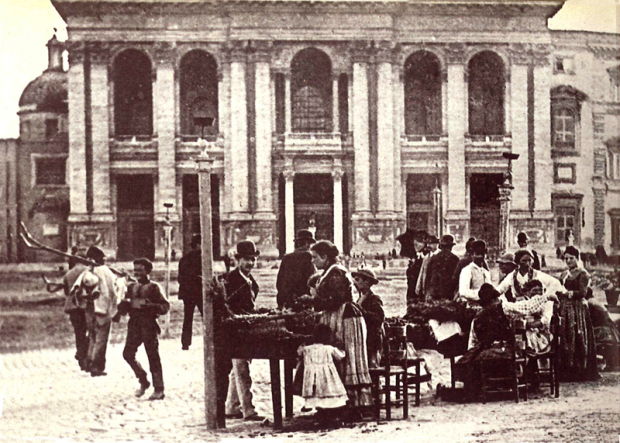
By the Middle Ages, the summer solstice cycle of pagan rites and festivities had been subsumed by the cult of John the Baptist, whose nativity is celebrated June 24. In this later context, the Christian legend of the Baptist’s beheading further informed Roman beliefs and practices on what was now known as La Notte delle Streghe, or Night of the Witches. Seeking to avert perceived supernatural evils—namely witches believed to fly over Rome on their way to the Benevento coven on this night, in particular Salome and Herodias—Romans would flock to the Baptist’s namesake church.
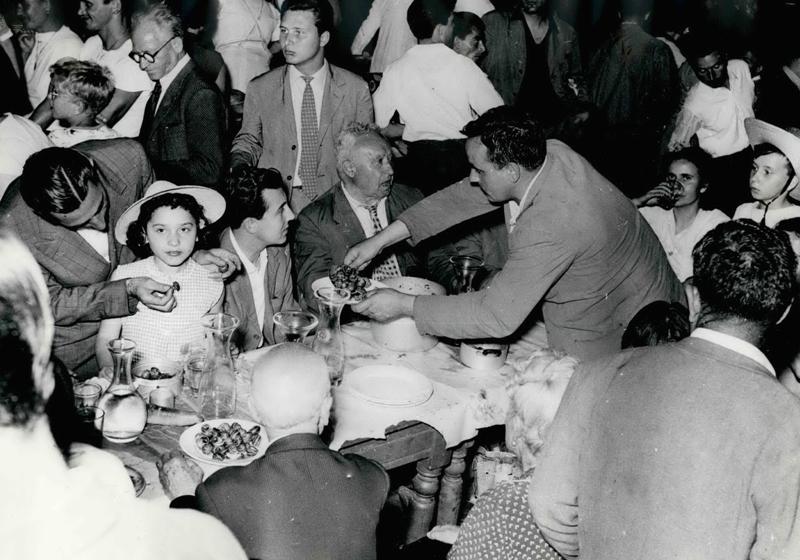
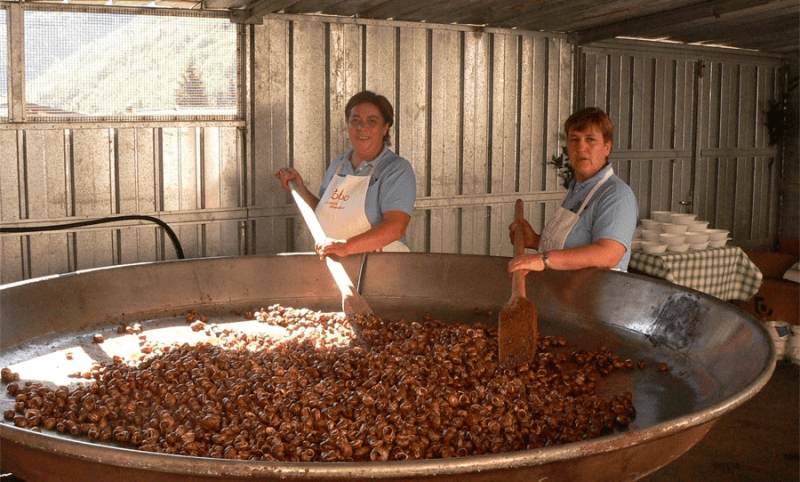
These public gatherings saw dancing, singing, and feasting (see the image above). Families would purchase baskets of snails brought in by peasants from the surrounding countryside (often vineyards), reflecting their ancestors’ belief in the snail’s auspicious potential. Indeed, the feast functioned as a communal apotropaic act, as conveyed in the saying: Per ogni corna di lumaca la notte di San Giovanni una sventura è scongiurata (roughly, “For every snail horn consumed on St John’s Eve, a misfortune is averted”). And the remnants of this heady historical hodgepodge of faith, superstition, and festivity live on in feasting events (sagre in Italian) that Romans call la lumacata di San Giovanni, feasts of St John’s snails stewed in tomato sauce, garlic, and herbs.
Today neopagans continue to experience Midsummer as a significant moment in the wheel of the year, a time to harvest all the magical energies this night releases—to seek healing and protection, to form life bonds and cement pacts, and to restore communal harmony. Hence the attendant mating rituals seen this time of year, such as marriage, handfasting, and bonfire leaping (not to mention fascinating health-restoring and beautifying rituals like l’Acqua di San Giovanni). At the core of these rituals is an enduring reverence for nature—plants, water, fire, sunlight and moonlight—believed to be at their most powerful on this sacred night.
 Writeous Folk