“They Even Eat Pig’s Blood!” Food, Fear & Friendship in “Welcome to the South”

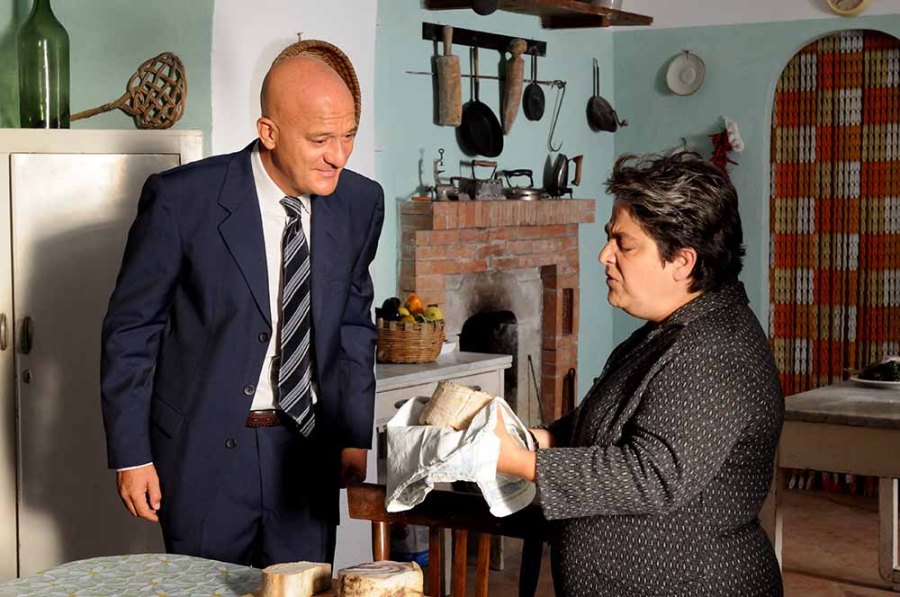
Benvenuti al Sud (2010), an Italian remake of Dany Boon’s Bienvenue chez les Ch’tis, treats the same topic—the social prejudices and stereotypes rooted in a country’s historical north-south divide—with a nearly identical plot and style.

It follows Milanese family man Alberto, a fastidious middle-manager employed by the Italian postal service who, through a series of ridiculous blunders, is sent to work in a small coastal town near Naples. When transplanted to Italy, the socio-geo construct turns on a reversal of that in Boon’s film: whereas Southern France is considered a civilized, even coveted Mediterranean paradise in Bienvenue (Northern France suffering dreary climes and proximity to distasteful, barbaric ways), the reverse is true for Benvenuti.  Here, Milan, Turin, and their respective regions are the seats of civilization, industry, and progress, with Southern Italy the land of rough land laborers, poor manners, and unchecked criminality. 

Benvenuti relies heavily on reciprocal misperceptions, with an emphasis on northern prejudices toward southerners, to deliver the lion’s share of its comedic value. While preparing for his dreaded journey, Alberto decides to leave behind his watch and wedding ring, given the thieves he’s sure to encounter. He packs body armor, which he wears to bed on his first night in a southern home as a guest of his younger colleague and soon-to-be friend, Mattia. Later, in an attempt to assimilate, Alberto dramatically tosses his garbage out the window onto the street below, having heard from a fellow northerner that this is how southerners do things. And so on.

To establish Alberto’s thoroughly Milanese character, before his departure he is seen attending a meeting of the Illustre Accademia del Gorgonzola, a masonic-like brotherhood devoted to the quintessentially Milanese cheese.  (Italy is, in fact, home to many such food societies, complete with rituals shrouded in secrecy and strict hierarchies, modeled on the medieval confraternity.)  During the meeting, a brother warns Alberto about the various dangers in the South, from its shoddily built houses to its ubiquitous truck drivers. Most dangerous of all though is the food, a threat on par with the sickening pollution. The scene introduces a theme that will underpin the rest of the film: the power of food to both divide and unite culturally dissimilar groups. 

The first morning in his new home, Alberto breakfasts with Mattia and Mattia’s mother. Insisting on something light (coffee and dry toast), Alberto is instead offered the sweet egg cream zabaione and a homemade pastry filled with chocolate and pig’s blood. Underlying this humorous (albeit exaggerated) portrayal of contrasting eating styles is a graver topic, however—poverty versus abundance. In the historically poorer Italian South, abundance on the table in the form of richer homemade foods and larger portions is highly significant, while the abstemious, temperate foodways of the “civilized” North reflect a distinct historical privilege. Tellingly, Alberto’s own eating habits evolve alongside his developing friendships as he’s presented with opportunities that dissolve his former taste intolerance.

Charmed by the natural beauty of the area (filming took place in Castellabate, located south of Salerno amid Cilento National Park), friendships, and repeated invitations to dine and socialize with locals, Alberto progresses over the course of his two-year sojourn from a rigid, anxious man hindered more than he realizes by his trace xenophobia to a playful, relaxed man who is clearly happy and confident in his new element. In a scene indicative of his changing nature, he decides to join in the football match in the piazza just outside his post office—something he’d previously shunned as work-shy and inappropriate. Though a bit heavy-handed and predictable, and certainly guilty of perpetuating more than a few hackneyed comedy tropes, Benvenuti al Sud offers many pleasing moments in which our protagonist’s stodgy nature is enlivened, and arguably upgraded, through unlikely friendships. 

Benvenuti also achieves something audiences have come rather increasingly to expect (à la the current genre-blurring era of Netflix original series): a bridging of the gap between comic frivolous and tragic serious, facilitating edification for viewers in the guise of lighter-side entertainment. While Alberto’s errors in judgment evoke conventional comedic twinges of shame, his journey presents him with much loftier moments in which we see him thoughtfully reassessing his own bias. Ostensibly Benvenuti al Sud strives to make us laugh by exposing the folly of these specific Italian v. Italian stereotypes, and indeed it works hard to do this with its comedy. Yet in the dismantling of Alberto’s prejudices—prejudices that in Italian reality are very serious—we witness a character’s hopeful metamorphosis. 

The final scene of Benvenuti is refreshingly poignant, particularly within the otherwise cringey, hyper-cosmetic Italian comedy realm, yet at the same time feels somehow antithetical (ppov) to its own message. As the friends say their farewells, Alberto’s wife Silvia leans towards the visibly pregnant belly of her southern counterpart, Mattia’s now-wife Maria, to welcome il terroncello, or baby southerner, a diminutive derived from the infamous Italian pejorative, terrone. In turn, Maria responds, Ciao, polentona! referencing a common label for northerners, especially Milanese, for whom polenta is a staple. While the latter term draws from the ubiquitous use of food-rooted ethnic slurs to express racist ideology (English speakers will recognize terms like kraut, frog, and beaney, to name a few), it is a far slighter comment than the significant insult terrone, a word loaded with layers of systemic racism and classism, and the complex legacy that comes with that. 

Though delivered affectionately, the exchange continues the film’s relentless reliance on divisive stereotypes for humor, just at the moment we expect something more, something akin to a true rejection of such language, and I admit my dismay here the first time I watched Benvenuti. After subsequent viewings, however, I began to see the scene as a reminder of what has been at stake throughout—changing minds via comedy is a tall order, after all—as well as what has been achieved. Having upended at least a few of the damaging perceptions Benvenuti seeks to address, perhaps it has earned the right to conclude on its own comedic terms.
To the Edge and Back: A Love Letter to Penzance

Let’s call this a love story. Better stilla love letter.  Whatever we call it, it is without a doubt a tale of love, one that could very well turn out to be the greatest of my life. 

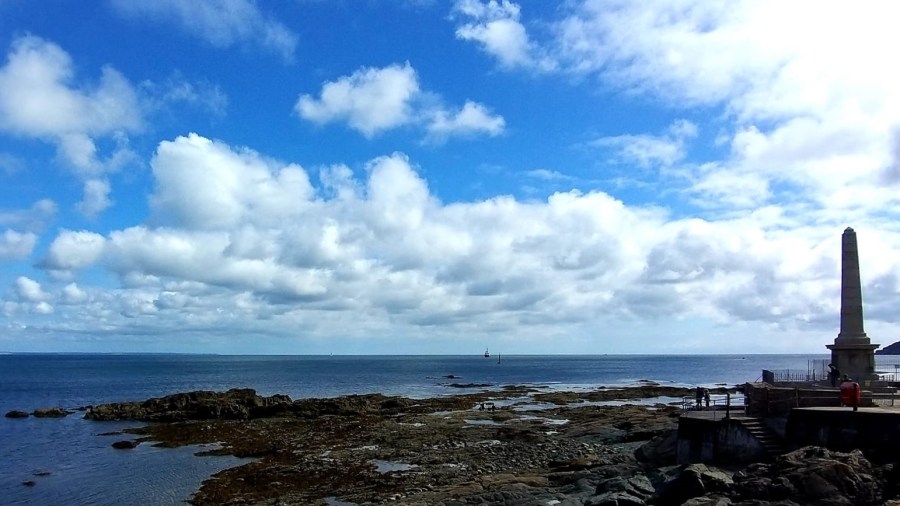
I arrived in Penzance in the summer of 2016, alone, with little hope and no direction. I knew no one save an acquaintance I’d met on the train. I had read almost nothing about the town, carried no map, no guide book. Aside from a few potential articles to pursue, Cornwall offered no occupation for me, professional or otherwise, and more than once in those early days, anxiety and guilt about my seemingly reckless actions would jab at me. I had no plan. Just a primal urge to flee a life that overnight had toppled and nearly taken me down with it. I wandered about Penzance, listless and zombie-like despite an acute ache, getting my bearings and filling my pantry. Eager for distraction, I’d sometimes pause to look in the storefront windows along Market Jew street, only to catch sight of something terrifying reflected in the glass: a spiritless shadow of the woman I had once been. Back in my flat near the harbour, unpacking groceries before my kitchen’s window-framed view of St Michael’s Mount, I’d say to myself, You did it. You landed yourself in Cornwall. Cornwall! Get out and explore! But instead, I’d open a bottle and start on the considerable day drinking that by my estimation had delivered me thus far from madness.  

A sheet of paper turned things around. While on one of my zombie crawls, I’d seen the plain, unobtrusive notice for an open mic night. Remembering it later, I decided to break from my usual evening routine of how many tears to fill this wine glass? and I went out. That mild September evening marked the beginning of a shift, a turning point that would prove vital to my survival. Filled with talented, kind people come together for music and camaraderie, The Star managed to draw my thoughts beyond my own pain that night, by simply offering me the chance to make a few friends. In the weeks following, providence continued to toss grace in my path in this manner. Nourished by an unexpected sense of community, my connection with Penzance grew stronger each day, and by degrees the notion of leaving after a mere two months seemed absurd. I recall quite vividly the moment I knew I would extend my stay. During the Guildize harvest festival, there was much talk in the air of the upcoming Montol, a Cornish winter solstice celebration. Intrigued, I listened to my friends’ descriptions of that awesome and curious festivity, which together with a desire to experience a proper Cornish Christmas seemed reason enough to stay through the end of the year.  

Two months became three, then four, then five. Since I had entered the U.K. on an American passport, and thanks to various cursed immigration laws, I knew my allowed time in the country ended on x date, which I marked on the calendar with a weepy emoji then proceeded to banish from my consciousness for the next three months. Meanwhile, I tried to reconnect with things I love and allow myself a dose of contentment each day. I went back to writing.  Not the run-of-the-mill stuff that in the past would have paid the bills. No, nowith quirky Penzance as my muse, surely I could dare beyond the prosaic. So I started a diary, documenting my new life with detail and deliberation. The musical and spoken word performances I’d seen about town compelled me further; I attempted some verse of my own, some of which I shared before a small group at one Tuesday evening open mic, my nerves bolstered by friendly encouragement and sauvignon blanc. Today I’m a little ashamed to admit that my motivation for taking up poetry at that particular moment in my life was hardly nobleI desperately wanted to fit in with that brilliant lot, and lacking musical skills of any kind, I chose the only medium I’ve ever really been comfortable with. The effort though, the process, brought with it an extraordinary side-effect: the reawakening of a past-bound, dormant version of myself, that fearless, starry-eyed young woman who had so loved creative writing at university. And I had achieved something precious and rare for middle age. I’d surprised myself. 

A barely-used book of Thai recipes I’d picked up for a pound at a charity shop helped me get back to the thing I love most. I had never made Thai food before. Despite my passable skills and intrepid nature when it comes to cooking, I saw in those gorgeous, glossy pages a potential challenge. Could I really create the complex, nuanced flavours that so distinguish this cuisine? I set about it, making lists and re-adjusting my mindsetyou see, in Tuscany, where I’ve lived for 15 years, locating so-called ‘ethnic’ ingredients and ‘exotic’ spices can be a frustrating, at times utterly futile, questand hunting down what I needed at the Causeway Head food shops. Fragrant soups, devilish curries, colorful, zingy pad thai…I cooked a Thai dish on average once a week for most of my five-month stay in Penzance, gaining flavour familiarity, taste confidence, and, I can admit, some pride in my results. I kept that cookbook at hand, strategically placed to remind me that no matter how dismal or uncertain my situationjobless, nationless to an extent, my heart in pieces and my savings up in flamesopportunities for fulfillment were still within my grasp. I had only to seize them. 

Friends in Penzance contributed to my experience in various wayssharing traditions and recipes, inviting me into their kitchens. I had intentionally delayed trying a Cornish pasty, in part because the pre-made, window-displayed lesser cousins available at chain bakeries had me so dubious. My instincts proved just when a friend brought over a still-warm, homemade pasty for dinner and I, adequately famished, tucked in and finally understood all the fuss. At my first Cornish cream tea, having been drawn into that beguilingly droll ‘jam first’ debate, I was so taken with the cream I wondered how jam could figure in the controversy at all. But the event likely to dominate all my food memories is surely this: At the Ship Inn on Tom Bawcock’s Eve, witnessing the making of the stargazy pies and assisting, albeit in a meager way, in the preparation of that peculiar, legendary dish so bound to Mousehole identity. 

Friends back home noticed what was happening to me. Less troubled by my hasty flight to Cornwall, they tested the waters occasionally. You seem…better? Or You’re smiling. And, from a very dear friend: You’re not just surviving there. You’re thriving. It was true. I learned to laugh again in Penzance. I laughed and I cooked and I danced and I played music so loud the neighbors complained. I talked for hours about the personal crisis I was going through, with friends whose patience, wisdom, and support I could never do justice to here. Slowly, gingerly, I took to examining my life, at what I hoped to achieve now and what I knew I no longer wanted. Strangest of all, I began to perceive something rekindling within my heart, a tiny spark that would soon ignite and set me, one unsure, wobbly-toddler step at a time, on a path towards recovery. 

And then one morning, I woke up happy. Authentic, unadulterated happiness. Perhaps not definitively, but for that day and more to come, sorrow had given way to joy. It felt like fireworks. But it didn’t stop there. Something else was happening, something I still struggle to define. Call it an unnerving redesign of my personal ideologies. In Penzance, for the first time in over 20 years, I set aside my predominantly skeptical worldview and opened my mind to ideas and beliefs that before would have upset my comfort and even evoked my scorn. The possibility that something bigger than myself was shaping my life demanded my consideration. Why had I come to Cornwall with such impulsive, blind determination? What drew me here, unprepared and uninformed as I was, with no plan, no contacts, no sense of where I was going or what would happen to me? After months of reflection, I now believe that Penzance was my beacon, a magnetic pull towards a transformative moment that forced me to look at everything anew. A quote, some lines of verse I couldn’t quite place, had been itching my memory in those days. I tracked the work down, scribbled it out, and adopted it as a kind of lens through which to perceive my entire Penzance experience—

When we get out of the glass bottles of our ego,
and when we escape like squirrels turning in the
cages of our personality
and get into the forests again,
we shall shiver with cold and fright
but things will happen to us
so that we don’t know ourselves.

Cool, unlying life will rush in,
and passion will make our bodies taut with power,
we shall stamp our feet with new power
and old things will fall down,
we shall laugh, and institutions will curl up like
burnt paper.

I had described my own actions many times as an escape. To the recurrent question: What are you doing in Cornwall? I would often retort, I’ve run away from home. Accurate enough, at least superficially. The more I reflected on D. H. Lawrence’s Escape, however, the more I saw that my act of running away had meant very little; it was what followed, rather, that signified everything: that cold and frightening unknown, the necessary stripping away of all we think we know about ourselves, without which the subsequent and crucial ‘rushing in’ of life can have no bearing. Without Penzance and all it compelled me to allow for and reassess, I might have remained encased in the glass bottle for a long time, perhaps never changing course, never steering back from the brink of heart-death. 

There is so much I miss. A sunny morning view of the Mount. Sidestepping clumps of kelp washed up on the Prom. Newlyn lights in the distance come dusk. Tea at The Front Room. Stopping for fresh eggs at The Cornish Deli. A coffee at The Tube. Wind tunnels ‘round nearly every damn corner. Bathroom graffiti at Studio Bar. The spice rack at The Granary. A pint of Proper Job. A slice of cake and the best table at The Honey Pot. Fresh crab. Wandering the footpaths. The marvels of Morrab Gardens. The wee-hours walk home via Bread Street. The Farmer’s Arms posters. The buskers. The shoulder-to-shoulder geniality of The Crown on a Monday night. The artists and poets, faces and voices. And certain words whose utterance will always make me feel a bit the initiate in a mystery cult: Lafrowda. Hanterhir. Oggy. Hevva. Janner. Montol. Kernow.

Mostly I miss my friends, who gave their time and energy so I might better know and appreciate the beautiful stuff of Cornish life, from Lamorna Cove on a golden winter day to Sennen under a siege of swells, enchanting excursions to holy wells and stone circles, trekking through Penrose woods and past Loe Beach. The Godrevy Lighthouse, Porthcurno Cove, Porthleven. The meals and the music, the moments both laughter and tear filled, the jokes, lively debates, and silly sing-alongs. Generosity and kindness enough to take one’s breath away.

Dear Penzance, I know the debt I owe. I knew it the day I left and I know it as I write these words. You guided me through the darkest of moments and showed me the way back to light. And for that I will carry you in my heart, cherished and remembered, always.  

So I’m off to other forests. May life rush in

Ventotene: A Perspective

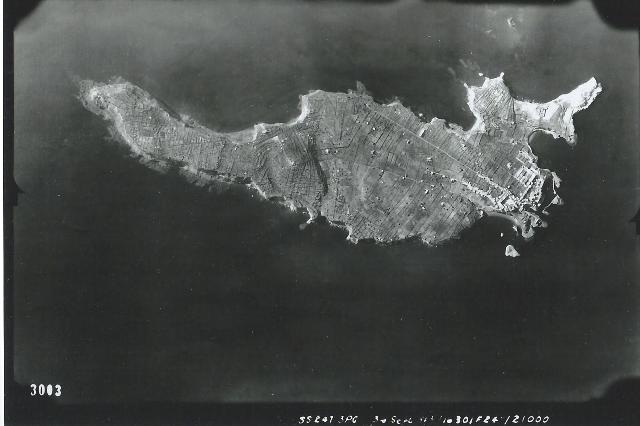
This 1943 military photo of Ventotene is the only known image of its kind. It forms part of the riveting story of the Allied liberation of this tiny Pontine Island off Italy’s Gaeta Coast on the night of September 8, 1943.

Like so many war tales, the liberation of Ventotene contains details both mundane and extraordinary. To give an idea of the island scenario at the time of the Allied arrival, I refer to a paragraph from John Steinbeck’s Once There Was a War, a collection of articles from his time as war correspondent to the New York Herald Tribune in the second half of 1943:

“…there was a radar station on [Ventotene] which searched the whole ocean north and south of Naples. The radar was German, but it was thought that there were very few Germans. There were two or three hundred carabinieri there, however, and it was not known whether they would fight or not. Also, there were a number of political prisoners on the island who were to be released, and the island was to be held by these same paratroopers until a body of troops could be put ashore.”

Strategically speaking, the capture of the island and the German radar was crucial to the Allies, given their operations taking place concurrently in southern Italy—most notably the battles at Salerno from September 9 to 17—and other Italian Campaign operations in that area to come. The mission itself, seemingly simple enough, entailed several potentially critical unknowns. Although there were fewer than 100 Germans on the island (87, to be precise), the Allies had no way of predicting how the larger Italian carabinieri presence referred to by Steinbeck would react, an uncertainty fuelled by the announcement that very day of the Armistice; Italy was no longer at war with the Allies, yet no clear indications had been given to Italian military as to how to proceed, nor how to conduct themselves vis-à-vis their just-yesterday enemies. The infamously confused and chaotic atmosphere created in the wake of the Armistice announcement saw the virtual disintegration of Italy’s armed forces, alongside mass desertions. Yet, at the time these events took place, the carabinieri, Italy’s military police, were considered loyal Fascists (though later, once disbanded, many former carabinieri joined the Italian Resistance).

Ventotene was as well, like the nearby island of Ponza, a penal colony for Mussolini’s political opponents (both islands have been places of exile since the ancient Roman era). In 1943, a number of dissidents and exiles were present on the island. One such exiled elderly gentleman, according to reports, assisted the American troopers of the 509th Parachute Infantry Battalion in carrying out a plan to deceive the occupying Germans into believing the approaching Allied forces were in the hundreds, having been deposited by an attendant fleet. In reality, the mission consisted of 46 troopers and one torpedo boat! The pitch darkness of night made such a deception possible, and a blackout had been in place on Ventotene since the start of the war.

Unbelievable as it seems, the initial “invasion” of Ventotene was conducted by a mere five American troopers. After receiving a signal indicating the stationed Italians’ intention to surrender, they approached the narrow port in a whaleboat, engulfed in a darkness described by Steinbeck as so thick “you could not see the man standing at your shoulder.” One of these soldiers proceeded with the plan, successfully convincing the German lieutenant in charge of Ventotene that he and his forces were far outnumbered. The Germans then surrendered, the carabinieri having already turned in their weapons, and the island was liberated in the middle of the night, without action or injury of any kind—indeed, without a single shot having been fired.