Gorse in Cornwall

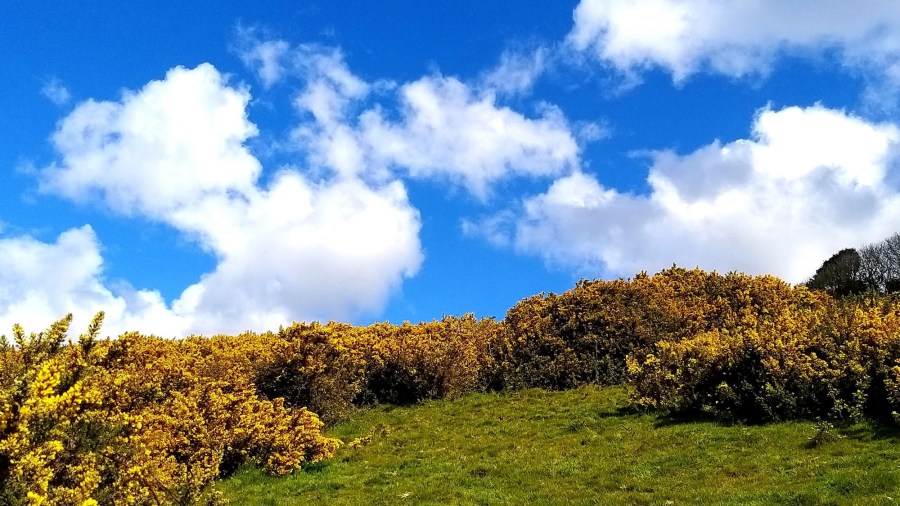
cornwall gorse

Gorse is a thorny evergreen shrub that thrives on Cornwall’s windswept moors and fields, bathing vast stretches of the Cornish landscape in cheery yellow for much of the year.

Also known as furze or whin, gorse plays an important role in area ecosystems, providing dense, protective cover for nesting birds. This abundant, resilient plant has been used traditionally for an array of purposes, from livestock fodder to dye-making and besoms, as a pest repellent for crops and even the ultimate clothes line (once latched on to its sharp, strong spines, fabrics are not easily blown away from gorse!). Long associated with fire, gorse is propagated through burning and is a high wildfire risk throughout the United Kingdom. Time ago gorse crofts were a vital source of firewood for Cornish peasants, its highly flammable qualities rendering it a valuable fuel.

Come the start-of-summer ritual observances around May Day, gorse appears alongside other May flowers in bundles attached to one’s front door or posts to ward off evil, thieves, or ill-wishers; and in Cornwall particularly locals might tie a sprig of gorse to the front door in exchange for treats from friends and neighbors. To some the national flower of Cornwall and for ages linked to Saint Piran, early Christian saint and patron of tin miners (and popularly recognized as patron saint of Cornwall, though he shares that status with at least two others), gorse represents one of those bridges between symbolic and literal I find so fascinating, connecting folkways, cultural identity, and the natural world through its many uses and associations.

Gathering gorse flowers can be a dangerous undertaking. Some wear gloves, but the best method is simply to pull the flower buds towards you to avoid being pricked by gorse’s small yet ferocious spines. So if you manage to gather some flowers sans bleeding, one way to make use of the flowers’ not-overly-floral composition and rich, almost nutty flavor reminiscent of coconut, is to make a cordial.  

Culture bites: Gorse is called ginestrone in Italian.  According to a Sicilian legend, the crackling noise of a burning gorse plant in the garden of Gethsemane attracted the attention of the Roman soldiers who captured him. As a result, the plant was cursed to always crackle and hiss when burnt.

Variations of a popular saying in Cornwall and elsewhere in the U.K. reflect the plant’s prolific bloom throughout most of the year: “kissing’s out of fashion when the gorse is out of blossom” or “when the gorse is not in flower, kissing’s out of fashion’, among others.  Kiss the year long, in other words.

An Island Wonder: Tradition & Innovation at Ristorante Il Giardino

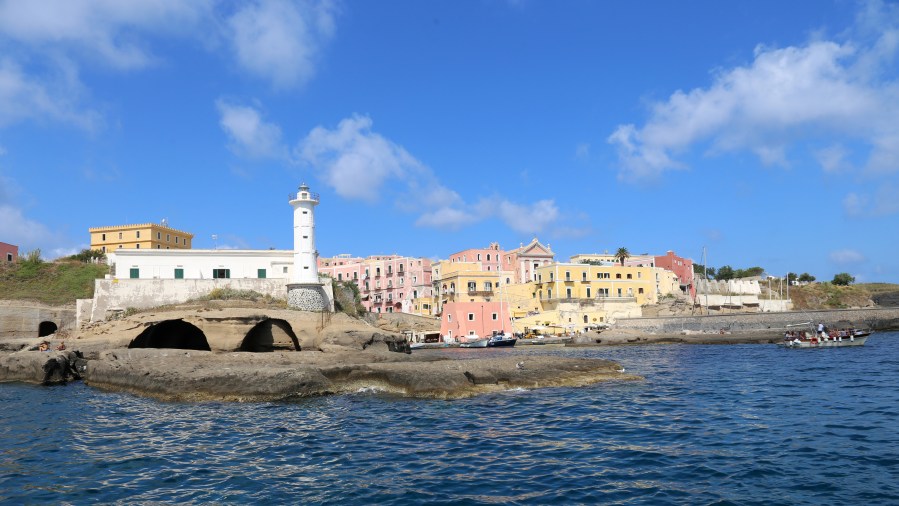
ventotene porto romano

There are so many reasons to visit Ventotene, one of the Pontine Island’s off Italy’s Coast of Gaeta, home to fewer than 900 locals in off-season and important marine and nature reserves prohibiting urban growth of any kind.

Exploiting the island’s remote location, some 2,000 years ago Romans hand-carved a port from the island’s tufa basin to provide access to Villa Giulia, place of exile for Augustus’s daughter Julia. Today the porto romano, one of countless extant examples of Roman architectural ingenuity, remains an active port for deliveries from the mainland and for local fishermen who provide the island’s main food source. It was this, the promise of uber-fresh seafood caught and prepared by locals, that lead me to lunch at Il Giardino.

The two cooks at Il Giardino, Candida and Christian (pictured below), would not seem to have much in common if it weren’t for their shared passion for this wondrous tiny island. United by a dedication to delivering quality dishes to locals and tourists alike, the two work side-by-side in a tireless effort to provide traditional yet innovative food experiences. 

Christian is from Ecuador and has lived in Italy for over a decade. He moved to Ventotene after living six years in Rome, during which time he was chef assistant to French culinary scene-stealer Giovanni Passerini at the acclaimed Roman establishment, Uno e Bino (now closed). Today Christian works alongside the restaurant founders, Candida and Giovanni, who opened Il Giardino over thirty years ago, together with the owners’ children.

In the kitchen, island native Candida’s extensive cooking experience and knowledge of the island—its abundance and limitations—pair perfectly with Christian’s flair and hard-won expertise, resulting in dishes that are at once harmonious, delectable, and beautiful to behold. 

In keeping with co-owner Giovanni’s vision, Il Giardino uses only products available on Ventotene. This means no or very little meat. As Candida explains, birds are protected on this migratory stopover island, and are thus by default ‘off the menu’. With no livestock farms here either, the cooks could pick up some pre-packaged meats delivered from the mainland, yet doing so would not be in line with the restaurant’s philosophy. Neither is there any game to hunt on Ventotene, save the occasional rabbit, which local hunters sell to Candida from time to time. 

Outside sporadic windfalls of this kind, the menu at Il Giardino is based exclusively on fish and seafood—selected each morning at the port by Giovanni himself—and the fairly bountiful vegetables grown on the island: onion, tomato, zucchini, eggplant, peas, artichokes, lentils, and potatoes.

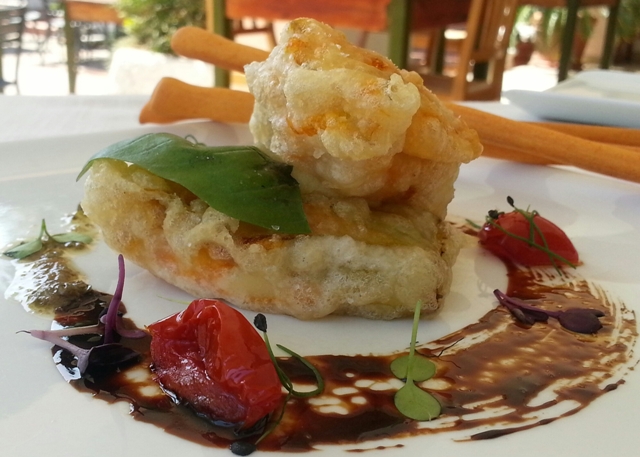
Working within the limitations of this island life is surely a challenge, and no doubt lesser cooks would falter. These two have absolutely flourished. Have a look at the two astonishing dishes Christian prepared, using only the seasonal, fresh ingredients favored by the restaurant:

For the fried zucchini flower starter, the flower is filled with ricotta and pecorino, then lightly fried to perfection. But what renders this dish a tour de force is Christian’s trademark confit, made by oven-cooking Pachino tomatoes low and slow (at 100 °C for 3 hours) with clove, lemon zest, and powdered sugar:

The ricciola carpaccio is marinated in extra virgin olive oil and sea salt, served with an orange emulsion, fresh fennel, delicate pea shoots, and capers. You will be forever dubious of cooked fish after tasting this melt-in-your-mouth stunner!

Ventotene bursts with visitors in summertime, a stark contrast to its quiet, empty, and altogether windy winter season (its name derives from vento, Italian for “wind”). The summer season peaks with ten days of festivities leading up to September 20, the feast day of the island’s patron saint (also named Candida). When I arrived, the Candida celebrations had just concluded. The island atmosphere was at once thrillingly blustery and peaceful, with few tourists in sight as I wandered the narrow streets and sun-showered miniature piazzas, and—in one of those remarkably fortuitous moments solo travel can bring—came to know the faces and flavors of Il Giardino.

La Veglia: An Ancient Winter Ritual

Darkness descends on the Tuscan landscape as weary farmers make their way home, ever-mindful of dangers both real and imaginary. Ahead, light from a farmhouse window pierces the dark, a beacon promising warmth and safety.

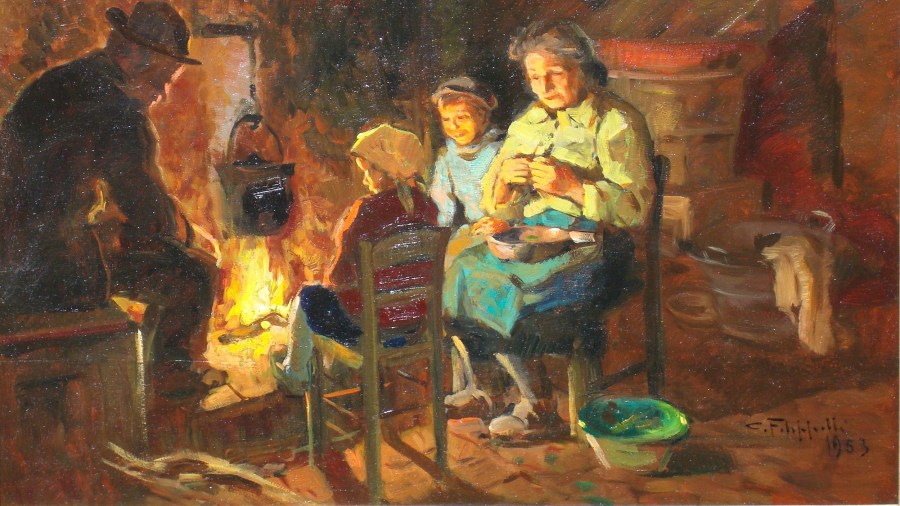
Inside the farmhouse, young women rekindle the fire while their mother oversees the evening meal. After supper, the fire now blazing, a few guests arrive—an eager suitor, a widowed uncle, perhaps a neighboring farmer—as grandparents, parents and children gather close. After some playful prompting, someone begins to tell a story: “Once upon a time…”

This is the ancient custom known as the veglia. Observed for centuries among Tuscany’s rural farming communities, the veglia was the principal social event among those who until only very recently formed the working majority of Italy’s sharecropping system, the mezzadria. At the center of this agrarian world were the podere (small farm) and farmhouse. Inside the house, the fireplace and its hearth were central to this ritual—one not by coincidence practiced during the darkest time of the year. From roughly the close of harvest season to the end of Carnival, families and guests would gather in the evening three or so times a week.

The veglia was a time for tales, songs, riddles, courting and even the occasional business deal. Concluding the day’s work and preparing for the next were also part of the ritual. Those gathered around the fire might conduct business with neighbors or mend clothes. They also prepared food for later use, peeling potatoes, shucking corn, or shelling chestnuts.

At first glance, the veglia might seem merely a way to pass the long winter nights in an age of candlelight and illiteracy. As its name suggests, however, the veglia—related to vigilia (vigil, or state of being awake)—resembles the wake, the funereal act of keeping watch, in both its literal and otherworldly ‘watching’ as well as in acts of merrymaking. 

But the practice had deeper purposes. In his comprehensive study, Folklore by the Fireside: Text and Context of the Tuscan Veglia, eminent Italian anthropologist Alessandro Falassi explains the meaning of the ritual’s structure: four segments that mirror the family structure and explore age-specific themes and concerns. Through its convivial and entertaining form, the veglia achieves its primary function of teaching, promoting, and affirming of the social values of the group. 

The veglia opened with fairy tales for the youngest children, formulaic stories illustrating appropriate behavior and accepted ways of responding to life’s difficult, even taboo, situations. Usually supernatural or magical, these stories also introduced children to communal expectations, such as marriage.

Next came riddles, games, songs, and the like, some instructional. Lullabies were sung for the small children being put to bed.

The courtship-related phase followed, a socially-sanctioned time for young unmarrieds to be together, with songs and stories about courtship (both happy and ill-fated) that frequently emphasized the importance of marrying within one’s group (a fisherman’s daughter does not marry a shepherd, for instance). Courtship acts also took place during the veglia at this point—from proposals to announcements of engagements, even break-ups.

The final phase of the evening focused on marriage and married life, its joys and tribulations, with songs, stories and the occasional bit of gossip affirming the social value of marriage and family. When the veglia ended, the fire would be left to rest for the night, to be revived in the morning.

Falassi notes that the veglia was the antithesis of the social realm of the tavern, where ‘card games, blasphemy, and political, obscene, and misogynous songs demonstrated male hostility toward traditional courtship and family patterns’—behavior interpreted as both a protest against the predominant social unit of the time and evidence of its strength and stability. The veglia, on the other hand, was a testament to the safety and protection afforded by the family and its collective values, embodied contextually in the light and warmth of fire.

pictured: ‘Presso il Focolare’ (By the Fireside) by Cafiero Filippelli (1889-1973), Livornese painter influenced by the Macchiaioli movement