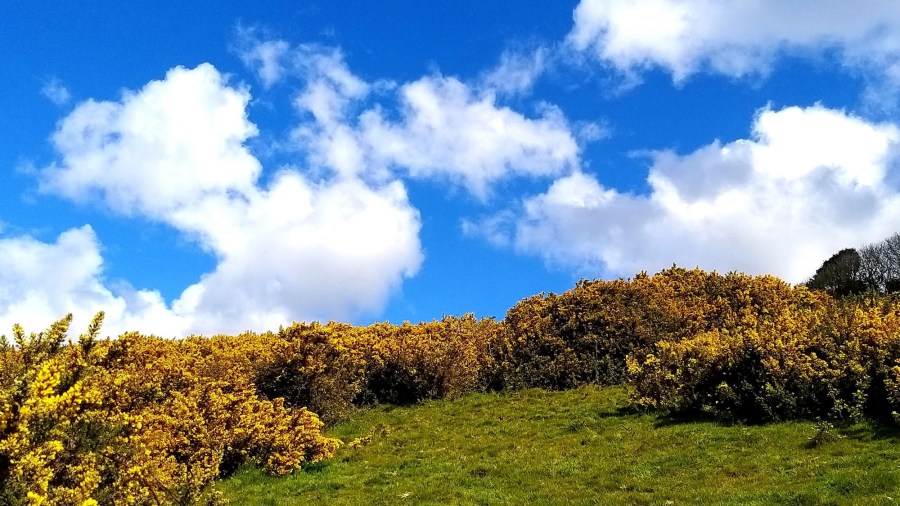
Gorse is a thorny evergreen shrub that thrives on Cornwall’s windswept moors and fields, bathing vast stretches of the Cornish landscape in cheery yellow for much of the year.
Also known as furze or whin, gorse plays an important role in area ecosystems, providing dense, protective cover for nesting birds. This abundant, resilient plant has been used traditionally for an array of purposes, from livestock fodder to dye-making and besoms, as a pest repellent for crops and even the ultimate clothes line (once latched on to its sharp, strong spines, fabrics are not easily blown away from gorse!). Long associated with fire, gorse is propagated through burning and is a high wildfire risk throughout the United Kingdom. Time ago gorse crofts were a vital source of firewood for Cornish peasants, its highly flammable qualities rendering it a valuable fuel.
Come the start-of-summer ritual observances around May Day, gorse appears alongside other May flowers in bundles attached to one’s front door or posts to ward off evil, thieves, or ill-wishers; and in Cornwall particularly locals might tie a sprig of gorse to the front door in exchange for treats from friends and neighbors. To some the national flower of Cornwall and for ages linked to Saint Piran, early Christian saint and patron of tin miners (and popularly recognized as patron saint of Cornwall, though he shares that status with at least two others), gorse represents one of those bridges between symbolic and literal I find so fascinating, connecting folkways, cultural identity, and the natural world through its many uses and associations.
Gathering gorse flowers can be a dangerous undertaking. Some wear gloves, but the best method is simply to pull the flower buds towards you to avoid being pricked by gorse’s small yet ferocious spines. So if you manage to gather some flowers sans bleeding, one way to make use of the flowers’ not-overly-floral composition and rich, almost nutty flavor reminiscent of coconut, is to make a cordial.

Culture bites: Gorse is called ginestrone in Italian. According to a Sicilian legend, the crackling noise of a burning gorse plant in the garden of Gethsemane attracted the attention of the Roman soldiers who captured him. As a result, the plant was cursed to always crackle and hiss when burnt.
Variations of a popular saying in Cornwall and elsewhere in the U.K. reflect the plant’s prolific bloom throughout most of the year: “kissing’s out of fashion when the gorse is out of blossom” or “when the gorse is not in flower, kissing’s out of fashion’, among others. Kiss the year long, in other words.

 Writeous Folk