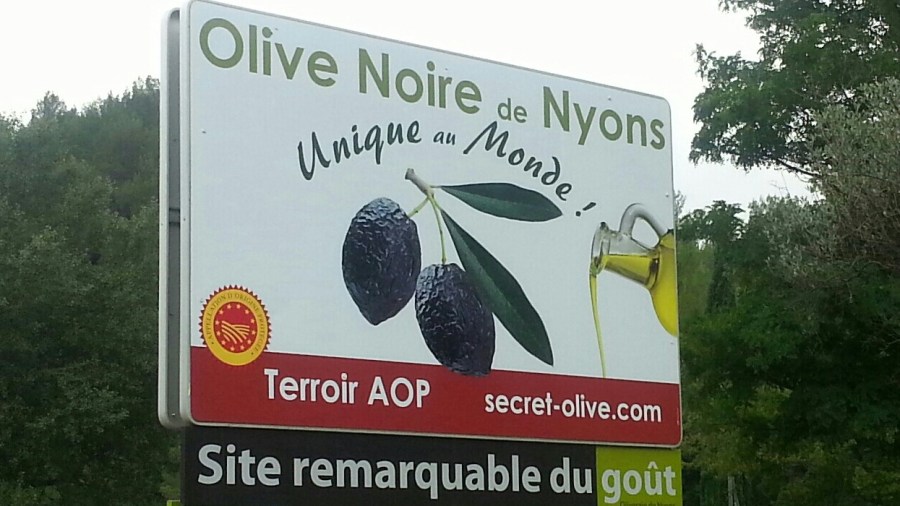
Black olives are important to the Nyonsais. Driving around their city in the Drôme department in southern France, you can’t help but notice the leading-role status awarded the local olives, here known as the black pearls of Provence.
A cultivar called tanche, these perle noire are everywhere: in the frequent turn-off signs to oil mills, in the ubiquitous olive tree symbol stenciled on everything from moving vans to store-front windows, and hillside after hillside of shimmering, immaculately-cultivated groves. But perhaps the strongest evidence of the olive’s influence is found on road-side billboards proclaiming the black olive of Nyons “unique in the world” and reminding those who pass through these parts that this is an appellation d’origine protégée product.
More than the groundwork of micro-economies such as olive oil production and soap and other beauty products, olives seem to truly form part of the cultural identity here. Walking through the bustling outdoor marché in Buis les Baronnies on a recent trip to Provence, all activity—chatting, tasting, bartering, buying—turned on the olive and its related products, such as black olive tapenade.
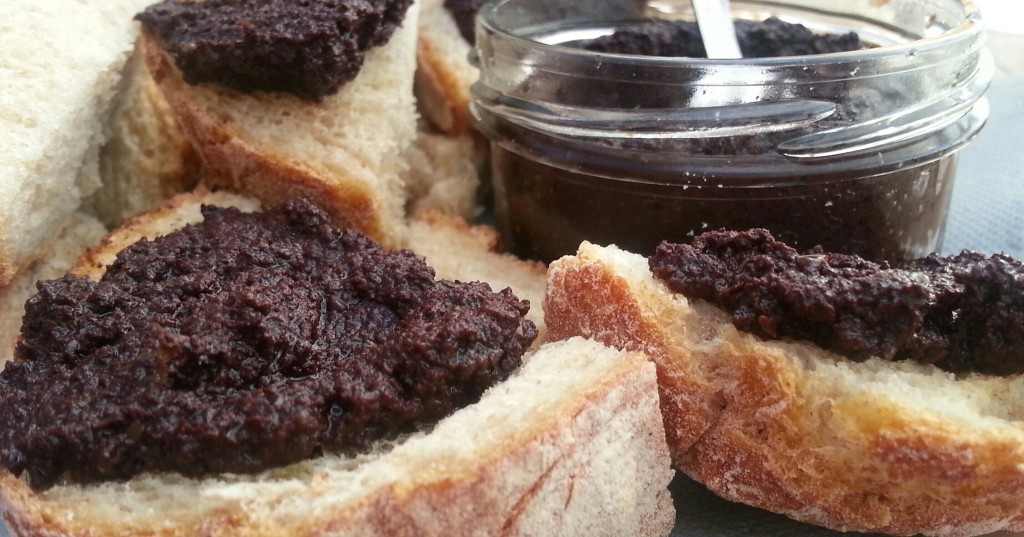
When eating out in or near Nyons, a small pot of black olive tapenade served with chunks of perfect bread is the essential hors d’œuvres nyonsaise (so ubiquitous, in fact, it reminded me of the customary chips-and-salsa starter at Mexican restaurants). If you don’t order tapenade, it will be recommended, invariably and strongly, by your server, whose superior yet gentle tone I interpret to mean something like: “It’s not my job to evaluate whether or not you have good taste, but I see you know nothing about it, and I prefer you do not miss out on this unique and delicious dish of ours.” With their strange blend of indifference and magnanimity, French servers are always to be complied with, in my experience.
Tapenade is unique. A dense, pleasantly-bitter, beautifully-black spread made of ground olives, capers, olive oil, and sometimes anchovy, herbs, and fresh garlic, tapenade needs a robust beverage partner: a red wine (ideally a Côtes du Rhône) over white, or a sweet, fortified apéritif (like Muscat de Beaumes de Venise) over beer or Prosecco.
Recipes for tapenade abound. Two of my favorite food writers, David Leibowitz and Georgeanne Brennan, both have great recipes (Leibowitz’s tapenade recipe post is, as always, a lovely read). For the purist, I suggest this traditional nyonsaise recipe I found in the gorgeous book Au Pays des Olives: Oliviers, Olives, et Huile d’Olive de Nyons:
Ingredients
500 grams (about a pound) of unpitted black olives (from Nyons, if possible)
2 tablespoons pickled capers
juice of 1 lemon
olive oil & salt
Instructions
Juice the lemon. Pit the olives, finely chop the meat and place it in a mortar or ceramic bowl. Add the capers and crush with a wooden pestle until a thick paste forms. Drizzle with olive oil, add the lemon juice and a pinch of salt, and stir well. You can also use a food processor, but the consistency will be smoother, not the slightly chunky version obtained with the traditional mortar method.
 Writeous Folk