Les Olives Noires de Nyons: Identity & Flavor in the Drôme Provençale

Black olives are important to the Nyonsais. Driving around their city in the Drôme department in southern France, you can’t help but notice the leading-role status awarded the local olives, here known as the black pearls of Provence.

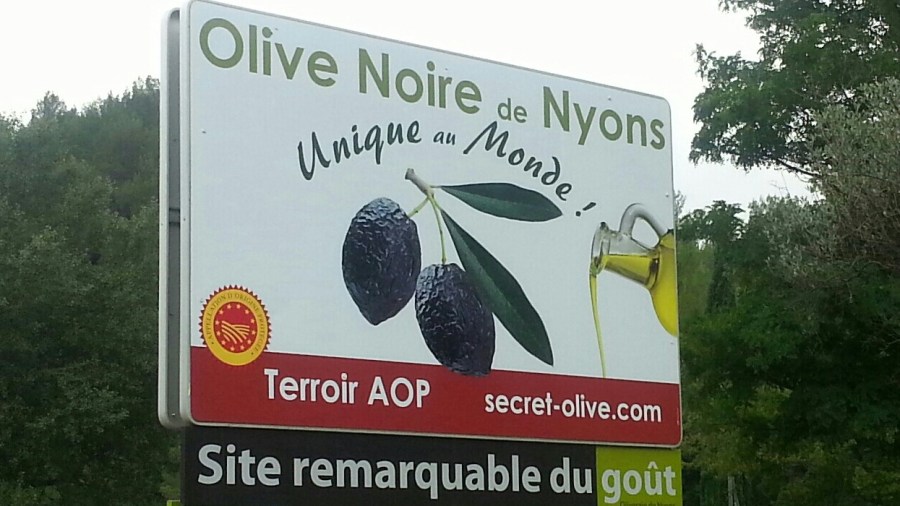
A cultivar called tanche, these perle noire are everywhere: in the frequent turn-off signs to oil mills, in the ubiquitous olive tree symbol stenciled on everything from moving vans to store-front windows, and hillside after hillside of shimmering, immaculately-cultivated groves. But perhaps the strongest evidence of the olive’s influence is found on road-side billboards proclaiming the black olive of Nyons  “unique in the world” and reminding those who pass through these parts that this is an appellation d’origine protégée product.

More than the groundwork of micro-economies such as olive oil production and soap and other beauty products, olives seem to truly form part of the cultural identity here. Walking through the bustling outdoor marché in Buis les Baronnies on a recent trip to Provence, all activity—chatting, tasting, bartering, buying—turned on the olive and its related products, such as black olive tapenade.

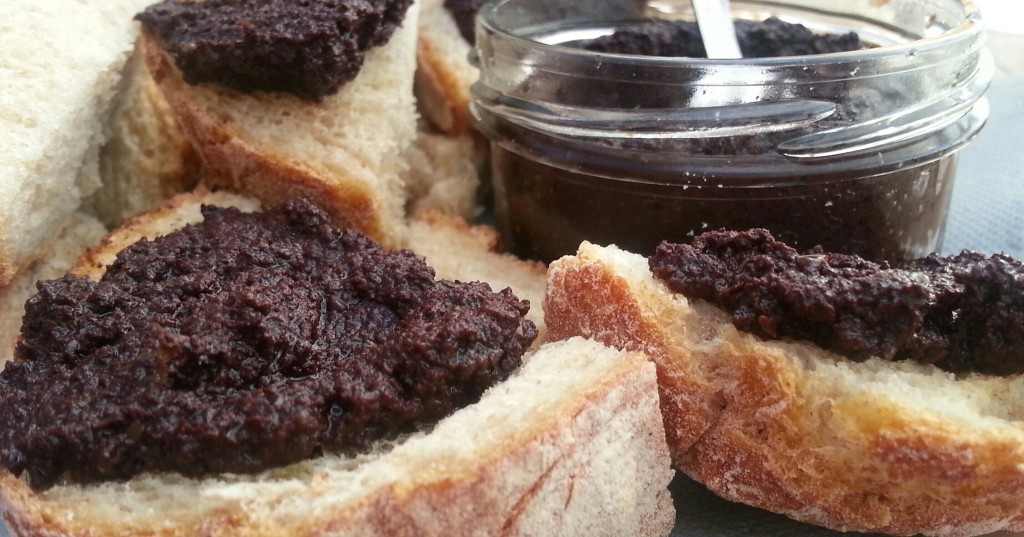
When eating out in or near Nyons, a small pot of black olive tapenade served with chunks of perfect bread is the essential hors d’œuvres nyonsaise (so ubiquitous, in fact, it reminded me of the customary chips-and-salsa starter at Mexican restaurants). If you don’t order tapenade, it will be recommended, invariably and strongly, by your server, whose superior yet gentle tone I interpret to mean something like: “It’s not my job to evaluate whether or not you have good taste, but I see you know nothing about it, and I prefer you do not miss out on this unique and delicious dish of ours.” With their strange blend of indifference and magnanimity, French servers are always to be complied with, in my experience.

Tapenade is unique. A dense, pleasantly-bitter, beautifully-black spread made of ground olives, capers, olive oil, and sometimes anchovy, herbs, and fresh garlic, tapenade needs a robust beverage partner: a red wine (ideally a Côtes du Rhône) over white, or a sweet, fortified apéritif (like Muscat de Beaumes de Venise) over beer or Prosecco.

Recipes for tapenade abound. Two of my favorite food writers, David Leibowitz and Georgeanne Brennan, both have great recipes (Leibowitz’s tapenade recipe post is, as always, a lovely read). For the purist, I suggest this traditional nyonsaise recipe I found in the gorgeous book Au Pays des Olives: Oliviers, Olives, et Huile d’Olive de Nyons:

Ingredients

500 grams (about a pound) of unpitted black olives (from Nyons, if possible)

2 tablespoons pickled capers

juice of 1 lemon

olive oil & salt

Instructions

Juice the lemon. Pit the olives, finely chop the meat and place it in a mortar or ceramic bowl. Add the capers and crush with a wooden pestle until a thick paste forms. Drizzle with olive oil, add the lemon juice and a pinch of salt, and stir well. You can also use a food processor, but the consistency will be smoother, not the slightly chunky version obtained with the traditional mortar method.
The Provence Problem

August 2012 – Our final hours in Provence, and we’re spending them at the supermarchet. Having made peace with our French supermarket obsession, we park and head to the entrance like giddy children let loose in a grown-up candy store.

No turnoff sign for Templar chapels or Roman ruins will ever entice us so much as a billboard for our favorite chain supermarket, we now realize—the liberating effects of this epiphany discernable in our carefree yet purposeful gait. Just through the turnstiles, we part ways without so much as a glance at one another: he makes straight for the fromage de chèvre; I follow my nose to what is possibly my favorite spot in all of France: the aisles of pâtès, sauces, and espices.

I run my fingers over textured packaging, study labels and inspect seals, getting my bearings before the daunting selection. Really, how does one choose among six brands of black olive tapenade? Most expensive? Fanciest label? Simplicity of ingredients, surely? The wannabe gastronome in me is frustrated, and not for the first time do I sincerely regret my poor French language skills in the face of such crucial decisions. Very close to sweeping entire shelf-fuls of glass jars into my basket, I remember my list. Hastily written on the short drive from our chambre d’hote, it serves not so much to remind me of the items I seek—I could recite them in my sleep, frankly—but to keep me in check.  Without the list, I’d be hugging cheese wheels and fighting wine bottles for leg space the entire six-hour drive home to northeast Tuscany.

An hour later we regroup at our tacit rendezvous, the wall of heady pink temptation that is the vin rosé section. Before choosing wine, however, we must evaluate the contents of our respective baskets, considering our pocket books—we are at the end of an eight-day sojourn in the south of France, after all—as well as sheer volume. A glance at his basket tells me he’s exaggerated the chevrè and skimped on Roquefort. Looking closer, I see he’s not forgotten, bless him, my beloved cancoillotte de Franche-Comté à l’ail, a spreadable cow’s milk cheese made with garlic, silky when warmed and wonderful as a dip for crudités—but only two containers? He reminds me of our ice chest’s limited capacity. I curse our decision to not bring a back-up. “Didn’t we see ice chests on display near the entrance?” I ask. “Let’s just buy another.” Reason is slipping away from me, and only the coaxing reminder Provence will always be here restores my self-control. I forfeit a kilo of crème fraîche for three additional tubs of the tangy, viscous, manna-from-cheese-heaven stuff. We can now turn our attention to the wine. Another full hour passes before we get to the checkout line.

Rationing our culinary cache begins as soon as we reach the car, my mental red pen scratching loved-ones’ names off my souvenir list with startling ease. Hasty repacking and a firm shove is needed to force the ice chest closed, while crammed into every spare inch of car space is a tin, sachet, or bottle of some kind. The lot in its entirety—from lavender honey and herbes de Provence to Côte du Rhône wines, Alpine Crème de Violettes and Muscat de Beaumes de Venise, too many pâtès to count—represents a hefty portion of our vacation budget. If we get pulled over, my husband jokes as we head towards the highway, we’ve got plenty of booty for bribing a French policeman. I chuckle with him, but it’s a duplicitous gesture. I’d go to jail before relinquishing a single item.

The problem with Provence is its proximity. It’s always there, just a half-day’s drive from home. Occasionally my thoughts wander in that direction. Noticing my store of French foodstuffs running down, I take to sulking about my kitchen, begrudging my own backyard herbs their Tuscan extraction. We can just go, I think. Just get in the car and go. Irrational calculations follow—one day of driving, 50 euro in fuel, another 50 in highway tolls, maybe a night in a cheap hotel—and we could be back at the supermarchet come Saturday afternoon! One weekend. A few hundred euros. Doable. Not all extravagant. Not crazy.

Then reality returns with its host of accompaniments. Deadlines and day jobs. Doctor’s appointments. Dishes to wash. The demands of our ever-portlier feline charges. So no Saturday jaunt to the French market, not this weekend at least. I open a jar of moutarde de Dijon and peer inside. As I mull over the possibilities, wondering how best to utilize what little remains, recipes begin to flicker in my head like strobe lighting. I grab a spoon and carefully scrape the jar’s insides. Perhaps at the bottom I’ll find my muse.

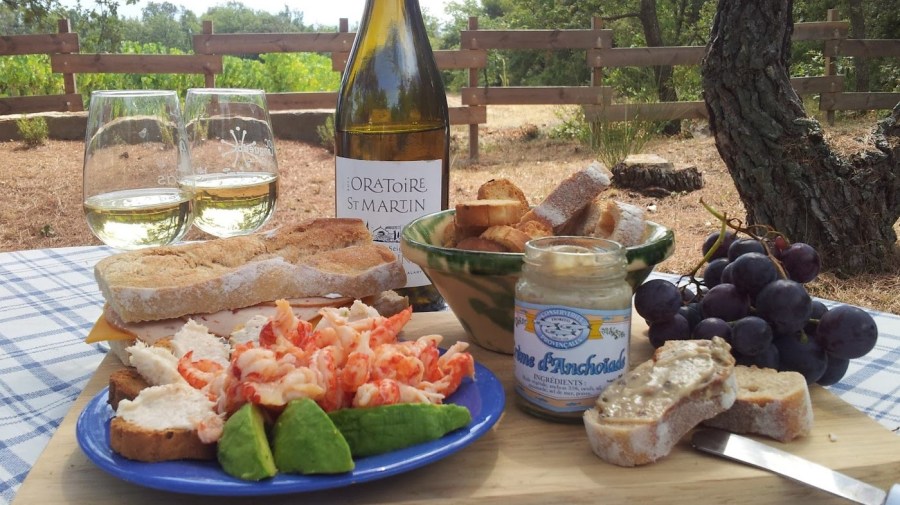
pictured: one of many problematic Provençal picnics